


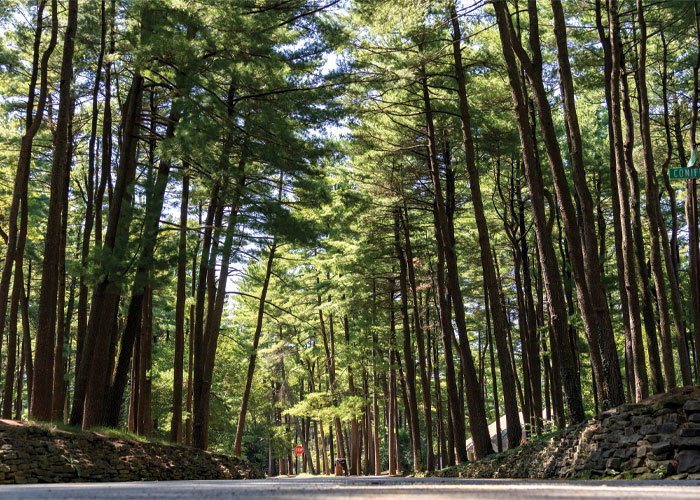
ROYAL PINE BOULEVARD is an unassuming street that winds its way southwest from East 79th Street to Dean Road for about 0.4 miles. If you ever happen upon it, you’ll be surprised to find yourself in a stealth forest of white pine trees towering 80 to 100 feet tall, with attractive midcentury ranch homes peeking from their shadows.
The site of a failed commercial tree nursery in the 1940s and ’50s, the land was unoccupied when homebuilder John Kleinops came upon it and noted it would make a unique residential neighborhood. Born to a carpenter in Latvia, Kleinops, along with his wife and two children, were displaced during World War II.
Eventually moving to the U.S., he built a construction empire, employing fellow immigrants and developing subdivisions across the city. He became known not only for his craftsmanship but also for conserving the environments where he built homes and integrating nature into his designs. He took pains to preserve as many of the trees in Royal Pine Estates as possible. Unfortunately, because it is a monoculture forest, it is vulnerable to pests, disease, soil damage, and biodiversity loss.
The trees are also nearing the end of their lifespan, many starting to die and becoming especially susceptible to storms. But residents of the neighborhood’s 75-plus homes, who live on offshoot streets with names like Fir and Juniper, have begun replacing them with evergreens that better suit the landscape like larch, Canadian hemlock, and Norway spruce, holding onto the romantic, one-of-a-kind feeling the fairytale forest in the middle of the city brings.


