


THE INFLUENCER
Amanda Gibson, Amanda in Indy
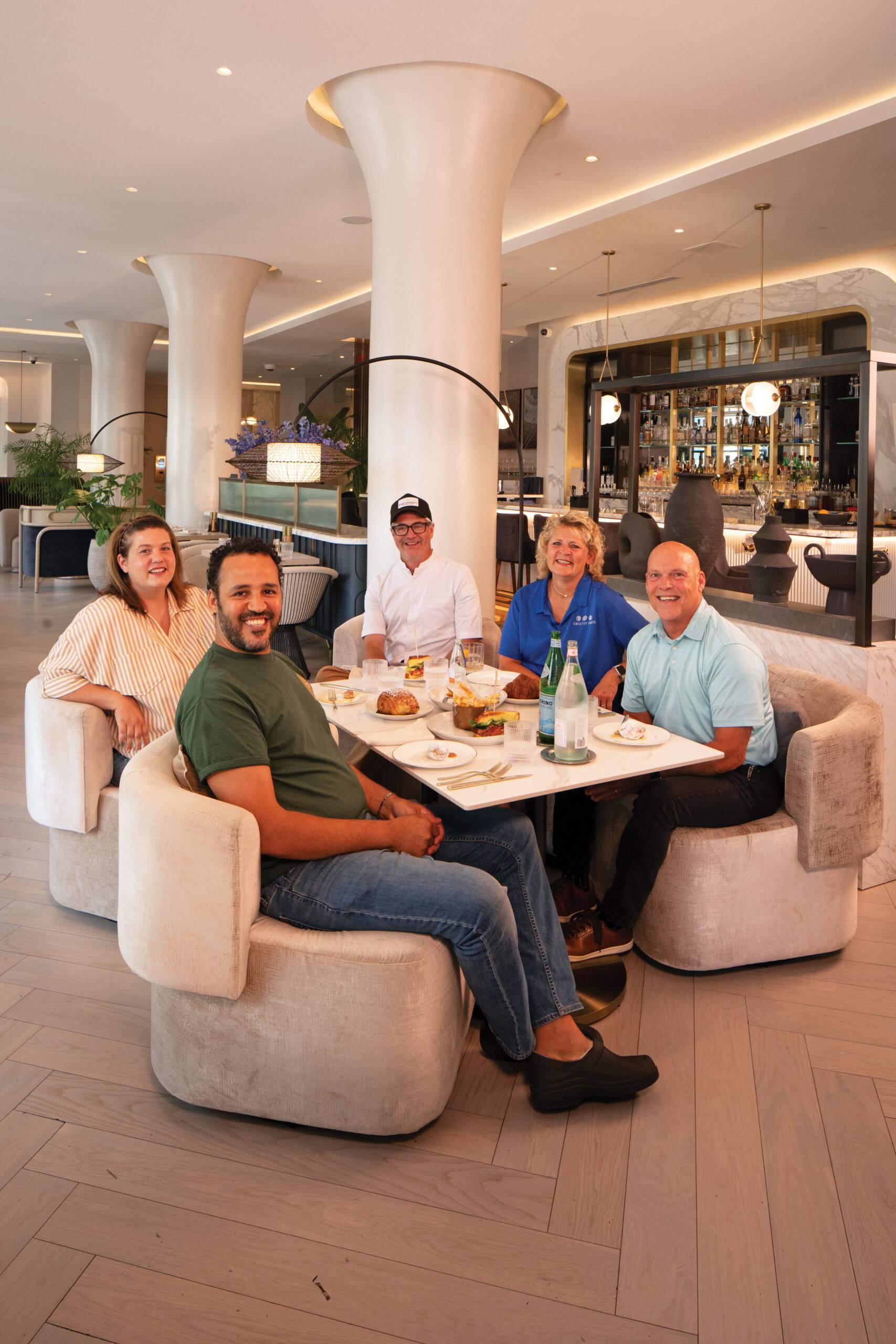
The first thing Amanda Gibson does when she sits down to a restaurant meal is order a glass of water. Then, she props her phone against it and presses record. There are no ring lights or crews—just a woman enjoying a meal and inviting thousands of followers to pull up a chair beside her. Better known as Amanda in Indy, Gibson has become one of the city’s most trusted food content creators by doing the opposite of what most influencers do. “I’m just going in and trying the food,” she says. “If I like it, then I get to post it.”
THE NETWORKER
Youssef Boudarine, Epicurean
Youssef Boudarine believes the best stories in food are often told by the people no one sees. A pastry chef at Bluebeard and founder of the nonprofit Epicurean, he has become one of Indy’s top promoters of the chefs, bakers, and servers who work behind the scenes—especially women and immigrants. Since launching Epicurean in 2024, Boudarine has built a series of collaborative dinners, festivals, and community events that celebrate the people behind the plates.
THE COMPETITION
Craig Baker and Cindy Hawkins, Team Indiana
As president and cofounder of Team Indiana, Cindy Hawkins of Circle City Sweets helps chefs prepare for competitions and represent the state at events such as the World Food Championships. What began in 2015 as an informal effort alongside fellow chef Craig Baker to support a few competitors has grown into a nonprofit network of roughly 30 chefs. “You really do want to see that next generation succeed and offer opportunities,” Hawkins says. Beyond competition, Team Indiana mentors culinary students, supports professional development, and is working toward a Hoosier Hospitality House for classes and industry events.
THE PROVIDER
Bob Koch, Second Helpings
When Bob Koch and two fellow chefs founded Second Helpings in 1998, they saw three problems that could solve one another: restaurants and events were wasting good food, Indianapolis residents were going hungry, and local kitchens needed trained workers. Their solution was a nonprofit that rescues surplus food from local restaurants, hotels, caterers, and retailers; turns it into meals; and teaches unemployed and underemployed adults the culinary skills needed to enter the restaurant industry. Today, the organization produces and delivers roughly 6,000 meals each day, including hot dishes, sandwiches, and grab-and-go family meals. “Our volunteers are indispensable,” says Koch. “They’re the engine that runs this machine.”


